
Sorkin was very knowledgeable about this topic, while drafting the screenplay for the film he read through a “dozen books on the subject, and 21,000 pages of transcripts from 5 1/2 months of the 1969 trial.”1He even met with some of the members of the Chicago 7 who were alive at the time, like Tom Hayden, in order to gain perspective on the subject so a good majority of the people and the events that happened are accurate to the history. The film also showcases archival footage from this moment in history, interspersing it within the narrative of the film and having the characters react and interact with this information, giving the film an overall authentic feel. A notable accuracy is the portrayal of Judge Julius Hoffman who was severely antagonistic towards the members of the defense. While watching the film, I thought his character might have been slightly exaggerated due to just how terrible of a person he came off as but as I researched the events of this film, I realized that Hoffman was actually much worse in real life.
While film writer and director Aaron Sorkin did his best to stay as accurate to the events of the trial as possible, he is someone who holds the belief that creative liberties can and should be taken when it comes to reimagining events which is why some events are moved around and altered to fit a certain narrative (such as the finale riot that led to the arrest of the Chicago 7 which had started in the afternoon until the the evening. In the film, the scene takes place solely at night in order to add dramatic flair to the event).2
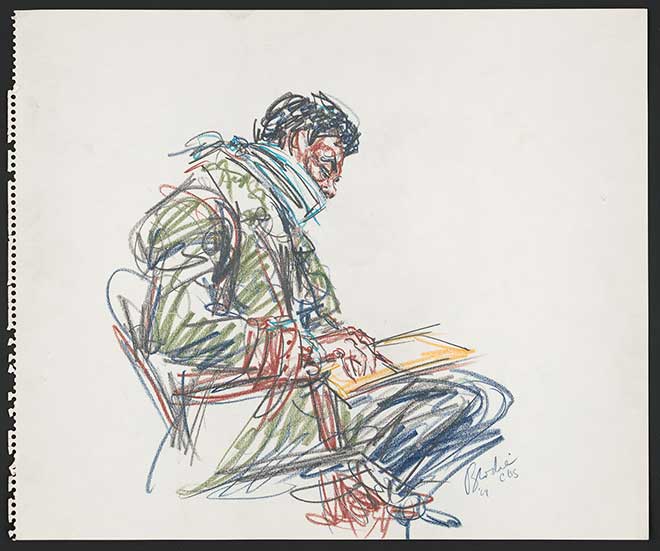
A notable inaccuracy that stands out about the film is the shuffling around of events to convey certain narratives. In the film, Fred Hampton, a member and leader of the Illinois chapter of the Black Panther Party, was killed during a police raid of his house and shortly after, Seale made an outburst in court about this which led to him being bound and gagged at the behest of the presiding judge, Julius Hoffman. According to the actual history of the events in question, Fred Hampton was killed servers months after Seale was bound and gagged in court. Similarly Seale was bound and gagged in court for about three days. In the film, after he was first bound and gagged, it does not happen again and almost immediately afterwards, his case is deemed a mistrial and he does not stay in court after that.
At the end of the film, Tom Hayden is given the opportunity to give the final statement for the defendants, the “Chicago 7,” by Judge Hoffman who says he will look favorably on his sentencing if his speech is short, to the point, and lacking in political statements. Hayden instead chose to read out the names of the American men who died as a result of the Vietnam War, concluding this scene. In actuality, this event occurred earlier on in the trial and was read out, not by Hayden, but by David Dellinger.
- Thompson, Anne. “IndieWire.” IndieWire, January 4, 2021. https://www.indiewire.com/awards/industry/aaron-sorkin-the-trial-of-the-chicago-7-1234606716/. ↩︎
- ↩︎
- Library of Congress. “Bobby Seale, Bound and Gagged | Political Activists on Trial | Explore | Drawing Justice: The Art of Courtroom Illustration | Exhibitions at the Library of Congress | Library of Congress.” Library of Congress, Washington, D.C. 20540 USA, www.loc.gov/exhibitions/drawing-justice-courtroom-illustrations/about-this-exhibition/political-activists-on-trial/bobby-seale-bound-and-gagged/. ↩︎
- Youtube. “The Trial of the Chicago 7 Ending Scene.” Www.youtube.com, 2020, www.youtube.com/watch?v=8NmKYRREy0k. ↩︎
